AI Prompt Engineering Guide: Communicate with Confidence
Getting useful results from artificial intelligence often comes down to one thing: how you ask. The AI Prompt Engineering Guide is a focused, 23-page resource built for people who want to stop guessing and start getting consistent, high-quality output from AI tools. It is not a dense textbook or a collection of random tips. It is a structured walkthrough designed to help you understand why certain prompts work and others fall flat.
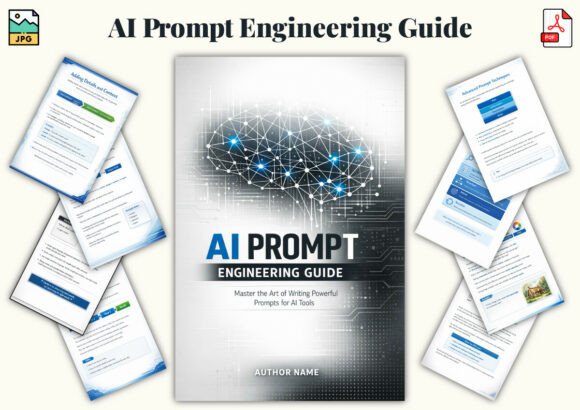
The guide presents itself with a clean, professional tech aesthetic. The layout uses clear visual hierarchy, generous white space, and well-placed infographics that break down complex ideas into digestible pieces. Every page feels intentional. The typography is modern and readable, and the accompanying visuals reinforce the concepts rather than distract from them. This is the kind of resource you can open on a laptop, tablet, or phone and immediately feel oriented. The 6 × 9 inch page size works well for both screen reading and printing, and the included JPG and PDF formats give you flexibility depending on how you like to learn.
The personality of this guide is straightforward and encouraging. It assumes you are capable but not necessarily experienced. It does not talk down to you, and it does not assume you already know the jargon. Instead, it builds from fundamentals into practical application, which makes it equally useful for someone just starting out and for someone who has been experimenting but wants more reliable results.
What You Will Learn Inside These 23 Pages
The AI Prompt Engineering Guide is organized around clarity and progression. It starts with the core idea that a prompt is essentially a set of instructions. From there, it walks you through the anatomy of an effective prompt, including context, specificity, tone, and format expectations. Each section builds on the previous one, so by the time you reach the later pages, you are combining multiple techniques naturally.
One of the strongest features is the inclusion of real-world examples across different use cases. You will see prompts designed for text generation, image creation, and analytical tasks. These examples are not abstract. They show you before-and-after versions so you can see exactly how small changes in wording shift the output. There are also visual infographics that map out decision paths for choosing the right prompt structure based on your goal. This makes the guide feel less like reading instructions and more like having a coach beside you.
Practical exercises are embedded throughout. These are not busywork. They are short, focused activities that ask you to apply what you just learned. Completing them builds muscle memory, which is essential when you are working under deadline pressure and need to generate strong prompts quickly. The guide is designed to be used actively, not just read passively.
Who Benefits Most from This Resource
The AI Prompt Engineering Guide is broadly useful, but certain groups will find it especially valuable. Content creators who generate articles, social media posts, or marketing copy will save significant time by learning how to reduce back-and-forth with AI tools. Instead of regenerating responses five times, you learn to craft a prompt that gets closer to what you need on the first try. Freelancers and designers who use AI for brainstorming, drafting, or visual references will appreciate the structured approach to getting consistent results across different platforms.
Students and lifelong learners benefit from the foundational approach. If you are new to AI and want to understand how it interprets language, this guide gives you a clear framework without overwhelming you. Small business owners and entrepreneurs who use AI for customer communication, content scheduling, or data analysis will find the analytical prompt examples particularly useful. The guide does not assume you have a technical background. It assumes you have a goal and need a better way to reach it using AI.
How the Guide Builds Real Skill, Not Just Knowledge
There is a difference between knowing what a good prompt looks like and being able to write one consistently. The AI Prompt Engineering Guide bridges that gap by focusing on principles that transfer across tools. Whether you are using ChatGPT, Claude, Midjourney, or any other AI platform, the underlying logic of prompt construction remains the same. The guide teaches you to think in terms of context, constraints, and desired output format. Once that framework clicks, you can adapt it to any tool or task.
The visual infographics play a key role here. They map out concepts like prompt length, specificity levels, and tone calibration in ways that are easy to reference later. After you finish the guide, you will probably find yourself returning to certain diagrams when you are stuck on a prompt. That is the mark of a well-designed resource: it works as both a tutorial and a reference.
The guide also addresses common mistakes that lead to poor AI output. Vague language, missing context, contradictory instructions, and format mismatches are all covered with clear explanations of why they cause problems and how to fix them. This practical troubleshooting angle saves you from the frustration of wondering why an AI tool keeps giving you irrelevant answers.
Using the Guide in Your Daily Workflow
One of the smartest ways to use the AI Prompt Engineering Guide is to keep it open as a reference while you work. Start by reading through the fundamentals section to get the core ideas. Then, when you have a real task, use the example prompts as templates. Modify them to fit your specific needs. Over time, you will internalize the patterns and rely less on the examples. The exercises accelerate this process because they force you to practice rather than just observe.
The guide is also useful for team settings. If you work with other people who use AI tools, this guide creates a shared vocabulary. Everyone learns the same terminology and techniques, which makes it easier to give feedback on each other's prompts and collaborate on larger projects. It works well as a training resource for new team members who need to get up to speed quickly.
For freelance designers and content creators, the guide helps you maintain a consistent level of output quality regardless of the tool or project type. When you are juggling multiple clients and deadlines, you cannot afford to waste time on trial and error. Having a reliable prompt framework means you spend less time wrestling with AI and more time delivering finished work.
Why the Design of the Guide Matters for Learning
The visual design of the AI Prompt Engineering Guide is not just about looking professional, though it certainly does. The clean layout, consistent use of color, and thoughtful typography all serve a learning purpose. Information is chunked into manageable sections. Headings are clear and descriptive. Key terms are emphasized so you can scan quickly when you need to find something later. The infographics translate abstract concepts into visual patterns that are easier to remember.
This kind of design integrity matters because it reduces cognitive load. When you are learning a new skill, the last thing you need is a cluttered layout or confusing navigation. The guide's minimal, tech-inspired design lets you focus on the content without fighting the format. It is a subtle but important factor in how quickly you absorb and retain the material.
For creative professionals who are used to working with well-designed assets, this guide will feel familiar and respectful of your time. It does not waste space with filler or decorative elements that add nothing. Every visual choice supports the learning objective. That discipline is rare in digital resources and makes this guide stand out.
Getting the Most Value from Your Investment
The AI Prompt Engineering Guide comes in both JPG and PDF formats, which means you can use it on virtually any device. The PDF version is ideal for reading on a tablet or laptop, while the JPG files are convenient for quick reference on a phone or for inserting into other documents. The 6 × 9 inch trim size is a standard that works well for printing if you prefer a physical copy.
To get the most out of this guide, approach it with a specific project in mind. Pick a task you have been struggling to get good AI results for, and work through the relevant section with that task as your target. Apply the examples, do the exercises, and note what changes when you adjust your prompts. This active learning approach will give you immediate returns that compound over time as you apply the same principles to new projects.
The guide also makes a thoughtful resource to share with colleagues or team members who are exploring AI tools. It removes the intimidation factor and gives everyone a common starting point. Whether you are a content creator, designer, entrepreneur, marketer, or student, the AI Prompt Engineering Guide offers a practical path to better AI communication without the fluff or jargon. It respects your time, builds real skills, and gives you something you will reference long after the first read.