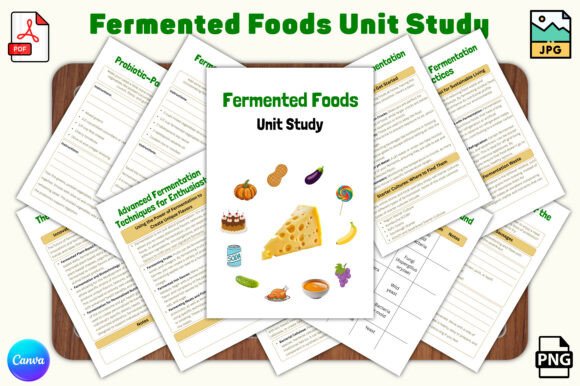
Fermented Foods Unit Study: Unlock the Ancient Art of Cultured Creations
Fermentation is one of humanity's oldest and most transformative food practices—a quiet alchemy that turns simple ingredients into tangy, complex, and nutritionally rich staples. From kimchi and kombucha to sourdough and sauerkraut, fermented foods have nourished cultures for millennia. But for many modern cooks, the process can feel mysterious, even intimidating. That is where a Fermented Foods Unit Study becomes an invaluable resource. Whether you are a curious beginner or a seasoned fermenter looking to deepen your practice, a structured, print-ready guide can demystify the science, build your confidence, and help you create delicious, probiotic-rich foods right in your own kitchen.
This article walks you through everything you need to know about fermentation—its fundamentals, its many forms, its health and culinary benefits, and how a dedicated unit study approach can accelerate your learning. By the end, you will understand not just how to ferment, but why it works, and how to integrate this ancient craft into your modern life.
What Is Fermentation? The Science Behind the Magic
At its core, fermentation is a natural metabolic process in which microorganisms—bacteria, yeasts, and molds—break down carbohydrates (sugars and starches) into acids, gases, or alcohol. This biochemical transformation does more than preserve food; it creates entirely new flavors, textures, and nutritional profiles.
Think of it as controlled spoilage. Instead of letting microbes ruin your food, you create conditions that encourage beneficial microbes to thrive, outcompeting harmful ones. Salt, temperature, and oxygen levels all play a role in steering the process. The result? Foods that last longer, taste brighter, and often become easier to digest.
For example, when you submerge cabbage in a salt brine, lactic acid bacteria naturally present on the leaves begin converting the cabbage's sugars into lactic acid. This acid preserves the cabbage, gives it that signature sour tang, and creates a crunchy, probiotic-rich sauerkraut. The same principle applies to yogurt, kefir, pickles, and countless other ferments.
The Three Main Types of Fermentation
Not all ferments are created equal. Understanding the three primary types helps you choose the right method for your ingredients and goals.
Lactic Acid Fermentation
This is the most common type for home fermenters. Lactic acid bacteria (LAB) convert sugars into lactic acid, creating a sour, tangy environment that preserves vegetables and dairy. Examples include sauerkraut, kimchi, pickles (fermented, not vinegar-based), yogurt, and sourdough starter. It is anaerobic, meaning it happens without oxygen, so you submerge ingredients in brine or pack them tightly to exclude air.
Alcoholic Fermentation
Yeasts convert sugars into ethanol (alcohol) and carbon dioxide. This is how beer, wine, mead, and hard cider are made. It also plays a role in leavening bread—the CO₂ gas creates bubbles that make dough rise. Alcoholic fermentation is typically aerobic in the early stages and anaerobic later, depending on the vessel.
Acetic Acid Fermentation
This is a two-step process: first, yeast produces alcohol; then, acetic acid bacteria (AAB) oxidize that alcohol into acetic acid, giving us vinegar. Kombucha is a hybrid—a symbiotic culture of yeast and bacteria (SCOBY) produces both alcohol and acetic acid, resulting in a fizzy, tart beverage. Acetic ferments require oxygen, so they are often left open to the air, covered only by a cloth.
Each type of fermentation offers unique flavors, preservation methods, and health benefits, making it worth exploring all three as part of your learning journey.
Why Ferment? The Practical and Health Benefits
Fermentation is not just a culinary curiosity; it offers real, tangible advantages that matter in everyday life.
- Preservation without refrigeration: In an age of energy dependence, fermentation provides a low-tech, sustainable way to keep seasonal produce edible for months. No canning equipment or freezer space required.
- Enhanced nutrition: Fermentation can increase the bioavailability of vitamins and minerals. For instance, fermenting cabbage boosts vitamin C and produces vitamin K2. The process also breaks down anti-nutrients like phytic acid in grains, making their nutrients easier to absorb.
- Gut health and digestion: Live fermented foods are rich in probiotics—beneficial bacteria that support a diverse and healthy gut microbiome. A robust gut microbiome is linked to improved digestion, stronger immunity, better mood, and even cognitive function.
- Unique, complex flavors: Fermentation creates umami, sourness, and funky notes that cannot be replicated by any other cooking method. It adds depth to simple dishes and transforms bland ingredients into culinary stars.
- Reduced food waste: You can ferment vegetables that are slightly past their prime, overripe fruit, or extra herbs. The process gives them a second life, reducing what ends up in the compost or trash.
These benefits explain why fermentation is experiencing a renaissance in modern kitchens, from home cooks to high-end restaurants. It bridges tradition and science, frugality and gourmet pleasure.
How a Unit Study Approach Accelerates Learning
Learning fermentation by trial and error can be frustrating. Without a clear framework, it is easy to make mistakes—moldy batches, off-flavors, or mushy textures—without understanding what went wrong. A Fermented Foods Unit Study provides structure, guidance, and accountability, helping you move from confusion to mastery efficiently.
A well-designed unit study typically includes several key components that work together:
- Science fundamentals: Clear explanations of the biological and chemical processes behind fermentation, written in accessible language. You learn the "why" so you can troubleshoot with confidence.
- Step-by-step recipes and templates: Instead of vague instructions, you get detailed logs, ingredient lists, and timeline trackers. This helps you replicate success and tweak variables systematically.
- Visual guides and worksheets: Beautiful, print-ready pages that break down complex ideas into digestible chunks. These are perfect for keeping in a binder or journal as you experiment.
- Progress trackers and observation logs: Fermentation is a living process. Recording temperature, time, smell, and appearance helps you learn to read your ferments and predict outcomes.
For example, a unit study might guide you through your first batch of sauerkraut with a printable log that tracks salt ratio, fermentation temperature, daily observations, and taste tests. Over a week or two, you build a record that shows how small changes affect the final product. This hands-on, structured approach turns abstract knowledge into practical skill.
Practical Tip: When starting your first ferment, choose a simple lactic acid ferment like sauerkraut or lacto-pickles. They require minimal equipment—just a jar, salt, and vegetables—and are forgiving for beginners. A unit study with recipe templates and troubleshooting guides will help you avoid common pitfalls like mold or soft textures.
Common Misunderstandings About Fermented Foods
Even experienced cooks sometimes hold misconceptions about fermentation. Let's clear up a few:
Myth: Fermented foods taste sour and unappetizing.
Reality: Fermentation produces a wide range of flavors, from mildly tangy to deeply savory and funky. You can control the intensity by adjusting fermentation time and temperature. Many ferments, like mild yogurt or young pickles, have only a gentle tartness.
Myth: You need special equipment to ferment at home.
Reality: While airlocks and crocks are helpful, you can start with a simple mason jar, a weight to keep vegetables submerged, and a cloth cover. The most important tools are patience, cleanliness, and a basic understanding of the process.
Myth: All fermented foods contain probiotics.
Reality: Live, unpasteurized ferments contain probiotics. Many commercial products are pasteurized (heat-treated) for shelf stability, which kills the beneficial bacteria. Always check labels or ferment your own to ensure you get live cultures.
Myth: Fermentation is dangerous and can make you sick.
Reality: When done correctly with clean equipment and adequate salt or acid, fermentation is one of the safest preservation methods. The acidic environment naturally suppresses harmful pathogens. Trust your senses—if a ferment smells rotten or shows fuzzy mold, discard it. But clear brine, a sour smell, and firm vegetables are signs of success.
Fermentation in Modern Life: Food, Business, and Creativity
Fermentation is more than a kitchen hobby; it touches many aspects of contemporary life.
Home cooking and meal prep: Ferments add instant flavor to salads, sandwiches, grain bowls, and roasted vegetables. A spoonful of sauerkraut or a splash of kombucha can elevate a simple meal. They also align with meal-prep routines—many ferments improve with age, so you can make a batch and enjoy it for weeks.
Small business and entrepreneurship: Artisanal fermented foods are in high demand at farmers' markets, specialty stores, and online shops. Kombucha, hot sauce, kimchi, and sourdough have become profitable niches for home-based businesses. A unit study that covers recipe scaling, safety protocols, and labeling can be a springboard for a fermentation micro-business.
Education and homeschooling: Fermentation is a perfect hands-on STEM activity for kids—it teaches biology, chemistry, observation, and patience. A unit study with printable worksheets and experiment logs fits seamlessly into science, health, or food studies curricula.
Creativity and experimentation: Once you understand the basics, fermentation becomes a canvas for creativity. Try adding herbs, spices, fruit, or tea to your ferments. Experiment with different salt concentrations, temperatures, and fermentation times. Each batch is a mini-experiment that teaches you something new.
Getting Started: Your First Steps with a Fermented Foods Unit Study
If you are ready to begin your fermentation journey, a structured unit study offers the clearest path forward. Look for a resource that includes:
- A comprehensive introduction to fermentation science (lactic, alcoholic, acetic)
- Printable recipe templates and observation logs
- Troubleshooting guides for common issues like mold, off-smells, or texture problems
- Suggestions for beginner-friendly projects
- Space to record your own experiments and notes
A 30-page print-ready guide in a vertical 6×9″ format—available as PDF, JPG, or PNG for instant download—gives you everything you need to dive in without overwhelm. You can print the pages you need, keep them in a binder, and refer to them as you work through each ferment. The visual design makes complex ideas easy to grasp, and the step-by-step instructions build confidence with every batch.
Start with a simple project like sauerkraut or fermented carrots. Follow your guide's recipe template, note your ingredients and conditions, and taste your creation after a few days. Record what you observe. That log becomes your personal fermentation manual, tailored to your kitchen environment and preferences.
Conclusion: Embrace the Journey
Fermentation is a skill that rewards patience, curiosity, and a willingness to learn from your ingredients. A Fermented Foods Unit Study gives you the framework to explore this ancient craft systematically—from the science of microorganisms to the joy of opening your first perfectly fermented jar. Whether you are fermenting for flavor, health, sustainability, or simply the satisfaction of creating something alive with your own hands, a structured guide transforms uncertainty into mastery.
So gather your jars, choose your vegetables, and let the microbes do their work. With a solid foundation and a bit of practice, you will soon be producing fermented foods that nourish your body, excite your palate, and connect you to a tradition that spans human history. Happy fermenting.