Mending Broken Family Bonds
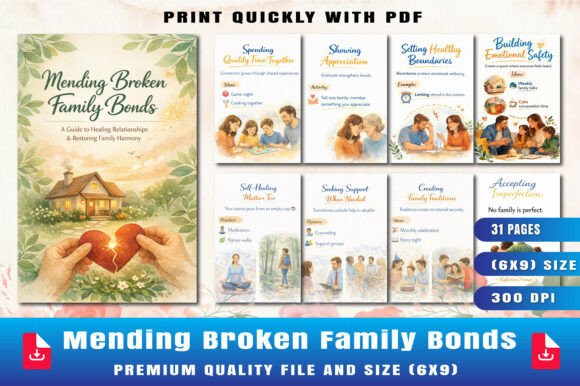
Family relationships can be some of the most rewarding connections we experience, yet they are also among the most fragile. Strained communication, unresolved conflict, and emotional distance can leave lasting scars. The desire to repair these bonds is often present, but knowing where to start is not always clear. Mending Broken Family Bonds is a 31-page healing guide designed to offer a thoughtful, structured path forward. It is not a quick fix or a set of generic platitudes. Instead, it is a practical companion for anyone ready to invest time and intention into restoring peace, understanding, and love at home.
The guide is presented as a beautifully designed PDF, delivered in JPG format for easy printing or digital use. Its 6×9-inch pages are filled with exercises, reflection prompts, and actionable steps that go beyond surface-level advice. Whether you are a parent hoping to reconnect with a child, a sibling seeking closure, or someone navigating the aftermath of a family rift, this resource provides a gentle yet grounded approach to healing.
What Makes This Guide Different
Many resources on family healing lean heavily into theory or offer advice that feels disconnected from real life. This guide stands apart because it is built around doing, not just reading. Each page invites you to engage with your own story, process difficult emotions, and take concrete steps toward rebuilding trust.
- Guided exercises help you unpack past wounds without feeling overwhelmed.
- Reflection prompts encourage self-awareness and genuine empathy for others.
- Techniques for rebuilding trust focus on communication patterns and small, consistent actions.
- Steps toward forgiveness are framed as a process, not a single decision.
- Activities for creating new traditions shift the focus from past pain to shared forward momentum.
The design itself supports the work. Clean layouts, soft nature-inspired elements, and calming visuals make the experience feel less clinical and more like sitting with a trusted guide. The tone is warm but not prescriptive, allowing each person to adapt the material to their unique situation.
Practical Applications Across Different Contexts
Family healing is not a one-size-fits-all endeavor. What works for a parent and teenager may look different than what helps siblings rebuild after years of distance. This guide is versatile enough to support a range of scenarios.
For Personal Growth and Self-Healing
Sometimes the first step in mending a family bond is addressing your own unresolved feelings. The reflection prompts in Mending Broken Family Bonds are designed to help you identify patterns you may have carried for years. You might discover how your upbringing shaped your reactions, or realize that a grudge you have held is costing you more peace than you thought. Working through these exercises alone can prepare you to have more honest conversations with family members.
For Parents and Caregivers
Parenting through conflict requires patience and a willingness to listen. This guide offers techniques that help parents communicate without triggering defensiveness. Instead of focusing on who is right or wrong, the exercises shift attention to understanding needs and building mutual respect. Parents who have used similar resources report that structured prompts help them stay calm and consistent, even when emotions run high.
In Family Counseling and Coaching Settings
Professionals working in family therapy, counseling, or coaching can integrate this guide into their practice. Its organized structure makes it easy to assign specific pages between sessions. Clients often appreciate having a tangible resource to refer to during the week, reinforcing the work done in session. The emphasis on trust-building and forgiveness aligns well with evidence-based approaches like emotionally focused therapy and restorative practices.
For Blended Families and Extended Relatives
Blended families face unique challenges around loyalty, boundaries, and belonging. The activities in this guide do not assume a traditional nuclear family structure. They are broad enough to apply to any configuration of caregivers, step-siblings, grandparents, or chosen family. The focus on creating new traditions can be especially powerful for families who are still building their shared identity.
Real-World Use Cases and Observations
Consider a scenario where an adult child has been estranged from a parent for several years. Resentment and misunderstandings have built up to the point where even a casual phone call feels tense. Using Mending Broken Family Bonds, that person might start with the reflection prompts to clarify their own feelings before reaching out. The guided exercises provide a safe space to explore pain without being consumed by it. Over time, small steps—like writing a letter or practicing a difficult conversation—can lead to real reconciliation.
Another example involves two siblings who have drifted apart after a disagreement over caregiving responsibilities. The guide helps them name their frustrations without blame, identify what they truly want for each other, and find small ways to reconnect. The tradition-building activities, such as planning a shared meal or starting a simple ritual, create opportunities for positive experiences to accumulate.
From a practical standpoint, the format matters. Because the guide is delivered as a JPG PDF, it can be printed at home or viewed on a tablet or phone. This flexibility means you can use it during a quiet evening alone, in a coffee shop while reflecting, or even during a co-working session with a family member who is also working on the relationship. The 6×9 size fits neatly into a binder or notebook, making it easy to keep alongside journal entries or other notes.
What You Can Expect in Terms of Results
Healing broken bonds is rarely linear, and no guide can promise instant harmony. What Mending Broken Family Bonds offers is a framework for consistent effort. Users who engage with the material honestly often report feeling more clarity about their own role in the dynamic, increased empathy for others, and a greater sense of hope about the possibility of change.
- Improved communication skills that reduce misunderstanding.
- A clearer sense of boundaries that protect relationships rather than harm them.
- Practical tools for managing conflict in the moment.
- Renewed appreciation for shared history and future possibilities.
- Reduced guilt and shame around past mistakes.
The visual and organizational qualities of the guide also contribute to its effectiveness. Calming colors and thoughtful layout reduce resistance to doing the work. When a resource feels inviting rather than intimidating, people are more likely to use it consistently.
Practical Considerations When Using This Guide
For the best experience, consider how you will integrate the exercises into your routine. Setting aside 15 to 20 minutes a few times per week is often more effective than trying to work through the entire guide in one sitting. Reflection requires space, both in time and emotional energy.
If you are using the guide with another person, decide together how you will share your responses. Some exercises are best done individually and then discussed, while others can be completed side by side. Respecting each person’s pace is essential. Not every page will resonate immediately, and that is fine. The guide is designed to be returned to as needed.
For professionals who plan to recommend this resource, it helps to preview the material yourself first. Knowing which exercises align with specific goals will allow you to give targeted assignments. The clean, structured format also makes it easy to reference specific sections during sessions.
Privacy is another factor. If you are working through sensitive issues, decide where and how you will store the PDF or printed pages. Having a private digital folder or a dedicated notebook can help you feel secure enough to be honest in your responses.
Who Can Benefit Most
This guide is for anyone who has felt the weight of fractured family relationships. It is suitable for adults in their twenties navigating independence and redefinition of family roles, as well as older adults seeking reconciliation after decades of distance. Parents, stepparents, siblings, adult children, and even close friends who function as family can find value in the exercises.
Professionals such as therapists, counselors, life coaches, and educators will appreciate having a ready-made resource to share. The content aligns with principles of emotional intelligence, conflict resolution, and attachment theory without being overly academic. It meets clients where they are.
Entrepreneurs, freelancers, and creators who work from home or run family businesses may also benefit. When professional and family boundaries blur, relationship strain can affect both productivity and peace. The communication and boundary-setting techniques in this guide apply directly to those dual-role dynamics.
A Gentle Invitation to Begin
Repairing family bonds is not about finding the perfect words or erasing the past. It is about showing up, again and again, with intention and care. Mending Broken Family Bonds offers a structured way to do exactly that. It does not pretend the work is easy, but it makes the process feel less overwhelming and more possible. Whether you are starting alone or alongside a loved one, the pages ahead hold space for honesty, growth, and the slow rebuilding of trust. The path is not always straight, but it is worth walking.