Success Mindset Prompts for Personal Growth
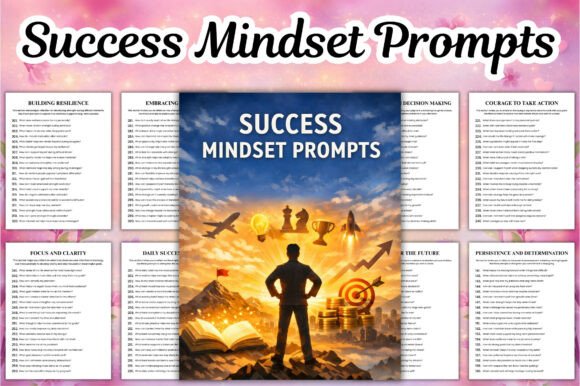
Building a success-oriented mindset is rarely about grand gestures or overnight transformations. It happens through small, consistent moments of reflection that gradually reshape how you think, respond, and pursue your goals. Success Mindset Prompts is a printable reflection workbook designed to guide you through exactly this kind of daily practice. With 320 carefully crafted prompts, it offers a structured yet flexible way to strengthen confidence, overcome self-doubt, and build habits that support long-term achievement. Whether you are new to journaling or have years of experience, this workbook meets you where you are and helps you move forward with greater clarity and purpose.
What Makes This Workbook Different from Ordinary Journals
Many journals offer open-ended pages or generic questions, but Success Mindset Prompts takes a more intentional approach. The prompts are organized into meaningful sections that target specific areas of personal development: self-belief, purpose, discipline, resilience, focus, and personal responsibility. Each section builds on the last, creating a cohesive journey rather than a random collection of thoughts. This structure matters because mindset growth is not linear. You might feel confident in one area and struggle in another, and this workbook acknowledges that reality by giving you space to explore both strengths and growth edges.
The format also supports multiple ways of engaging. You can work through the prompts sequentially, jump to a section that feels most relevant to your current situation, or revisit specific pages when you need a reset. This flexibility makes the workbook equally useful for daily journaling routines, weekly check-ins, or deeper sessions during weekends or quiet evenings. The PDF, JPG, PNG, and Canva link options mean you can print it out, use it digitally, or customize it to your liking. That level of adaptability is rare in mindset resources and makes the workbook feel like a tool you can truly make your own.
Who Benefits Most from Guided Mindset Reflection
If you are an adult between 20 and 50, chances are you are juggling multiple responsibilities while trying to grow personally or professionally. Beginners who have never journaled before will find the prompts gentle enough to start with, yet deep enough to produce real insights. The questions do not assume prior experience with self-reflection, so there is no learning curve to worry about. You simply read a prompt, pause to consider it, and write whatever comes to mind. Over time, this simple act builds a habit of honest self-assessment that spills into every area of life.
For professionals, entrepreneurs, freelancers, and small business owners, the workbook addresses challenges that directly impact performance and satisfaction. Self-doubt before a big presentation, difficulty staying disciplined during long projects, lack of clarity about the next step in your career—these are common struggles that the prompts help you unpack. Instead of letting uncertainty stall your progress, you learn to identify the underlying thoughts and replace them with more constructive ones. The same applies to educators, bloggers, marketers, and creatives who need to maintain motivation and focus while managing multiple demands. The workbook does not promise to fix everything overnight, but it gives you a reliable process for working through obstacles with more confidence.
Practical Ways to Use the Prompts in Real Life
The real value of Success Mindset Prompts emerges when you integrate it into your existing routines. Here are a few realistic scenarios that show how different people might use the workbook in their daily lives:
- Morning clarity routine: A freelance designer starts each day by selecting one prompt from the focus section. Spending five minutes writing about what truly matters today helps avoid distraction and sets a clear direction before checking email or social media.
- End-of-day reflection: A marketing manager keeps the PDF on a tablet and writes a short response to a discipline prompt after work. This simple practice helps her notice patterns in how she responds to pressure and gradually builds more intentional habits.
- Weekly goal check-in: A small business owner prints a few pages and uses them every Sunday evening to review progress, identify what held her back, and adjust her approach for the coming week. The purpose and vision prompts are especially useful for staying connected to long-term goals.
- Creative block remedy: A writer or content creator turns to the self-belief section whenever doubt creeps in. The prompts offer a structured way to reframe negative self-talk and reconnect with the reasons they started their creative journey in the first place.
- Group or coaching use: Educators and coaches can use selected prompts to facilitate discussions or individual assignments. The positive thinking and resilience reflections work well for group settings, while personal responsibility prompts encourage accountability.
These examples highlight the workbook's versatility. It is not a rigid program but a flexible companion that adapts to your pace, preferences, and current needs. Whether you use it alone or alongside other self-development tools, the prompts provide a consistent anchor for growth.
Building Self-Belief and Overcoming Self-Doubt
One of the most powerful sections in the workbook focuses on self-belief and confidence. Self-doubt is a common barrier that affects people at every level of achievement. It can show up as hesitation before an important decision, fear of failure, or the nagging feeling that you are not good enough. The prompts in this section are designed to help you examine those thoughts without judgment. They encourage you to explore where your doubts come from, challenge their validity, and gradually replace them with evidence of your own capability.
For example, a prompt might ask you to recall a moment when you overcame a difficult challenge and describe what personal strengths helped you succeed. Another might invite you to list three accomplishments from the past year and reflect on the effort behind each one. These exercises are simple but effective because they shift your focus from what you lack to what you have already proven. Over time, this builds a more balanced and resilient self-image that supports taking calculated risks and pursuing ambitious goals.
Strengthening Discipline and Productivity
Discipline is often misunderstood as raw willpower or strict routine. In reality, sustainable discipline comes from clarity about what matters and why. The discipline and productivity prompts in the workbook help you get to that clarity. They ask you to define your priorities, examine your current habits, and identify small adjustments that can lead to meaningful progress. Instead of forcing you to adopt someone else's system, the prompts guide you to discover what works best for your personality and circumstances.
A typical prompt might ask you to describe one task you have been avoiding and explore what makes it feel difficult. Another might help you break a large goal into smaller steps and consider what support you need along the way. These reflective exercises build self-awareness, which is the foundation of lasting discipline. When you understand your own resistance and motivation patterns, it becomes much easier to follow through consistently.
Focus and Goal Clarity in a Distracted World
Staying focused is harder than ever, with constant notifications, competing priorities, and the pressure to do more. The focus and goal clarity section of Success Mindset Prompts offers a space to cut through the noise. The prompts encourage you to define what success truly means to you, separate urgent tasks from important ones, and align your daily actions with your deeper values. This kind of reflection is essential for anyone who feels busy but not productive, or who has many goals but struggles to make progress on any of them.
One prompt might ask you to imagine your ideal day six months from now and describe what you would be doing. Another might invite you to list three things that drain your energy and explore how to minimize their impact. By returning to these questions regularly, you train your mind to prioritize what matters and let go of what does not. The result is not just better focus but a greater sense of purpose and satisfaction in your daily life.
What to Consider Before You Start
Before diving into the workbook, it helps to set realistic expectations. Mindset shifts do not happen after one session or even a week of journaling. The prompts work best when used consistently over weeks and months. You might notice small changes in how you talk to yourself or approach challenges after a few days, but the deeper transformation comes from sustained practice. Patience and self-compassion are just as important as the prompts themselves.
Another consideration is honesty. The prompts are designed to guide you inward, and the quality of your insights depends on how willing you are to be truthful with yourself. No one else reads your responses, so there is no benefit in glossing over difficulties or pretending everything is fine. The most valuable journaling happens when you acknowledge your struggles, fears, and imperfections alongside your strengths and successes. This balanced self-reflection is what makes the workbook a genuine tool for growth rather than just another productivity notebook.
Finally, think about how you prefer to engage with written material. The workbook is available in PDF, JPG, PNG, and Canva formats, so you can choose the version that fits your lifestyle. If you enjoy handwriting, print the pages and keep a physical journal. If you prefer digital organization, use the Canva link to customize and store your reflections online. The instant download means you can start immediately, but the real investment is the time and attention you bring to each prompt.
A Companion for Long-Term Growth
What makes Success Mindset Prompts stand out is its focus on the internal work that supports external achievement. Many resources teach techniques and strategies, but fewer help you cultivate the mindset needed to apply those techniques consistently. This workbook fills that gap by giving you a structured, thoughtful, and compassionate way to develop self-belief, purpose, discipline, resilience, focus, and personal responsibility. Whether you are working toward a specific goal or simply want to become a more confident and intentional person, the prompts provide a reliable path forward. The only requirement is a willingness to sit with your thoughts, write honestly, and keep showing up for yourself.