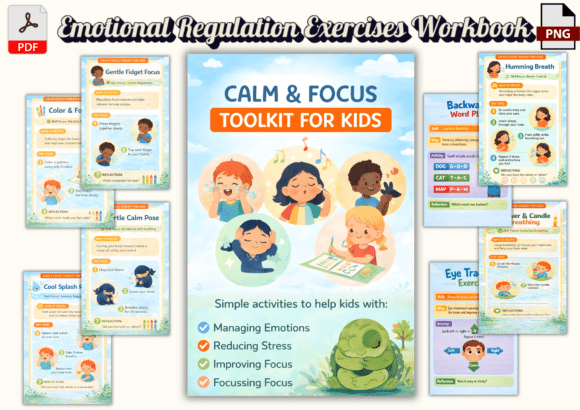
Emotional Regulation Workbook for Kids
Children experience big feelings every day—excitement, frustration, worry, joy—and often don’t yet have the words or tools to manage them. The Emotional Regulation Exercises Workbook is a thoughtfully designed resource that helps kids ages 4 to 10 develop foundational skills for understanding and handling their emotions. It turns abstract concepts like self-awareness and calmness into concrete, playful activities that any child can follow. Whether you’re a parent, teacher, or therapist, this workbook offers a gentle, effective way to support emotional growth without pressure or complexity.
What Is the Emotional Regulation Exercises Workbook?
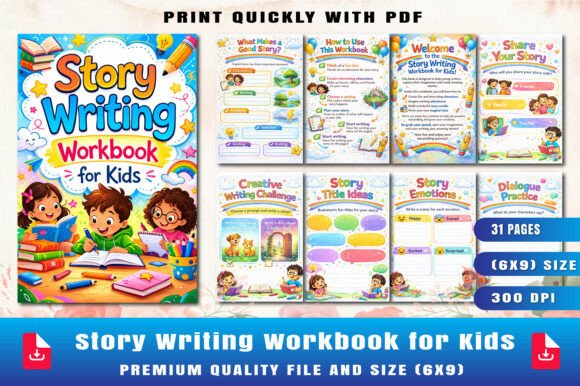
This workbook is a collection of 20 guided activity pages, each built around evidence-based techniques for emotional regulation. The exercises cover breathing, mindfulness, gentle movement, and reflection—approaches backed by research in child psychology and neuroscience. Every page includes kid-friendly illustrations, simple instructions, and thoughtful prompts that encourage children to stop, notice what they feel, and choose a healthy response. The format is straightforward: a 6 x 9 inch layout ideal for printing at home or using digitally on a tablet. You receive high-quality PDF and PNG files that work equally well in classrooms, therapy sessions, or calm-down corners.
The workbook doesn’t preach or lecture. Instead, it invites children to explore emotions through drawing, writing, moving, and pausing. It’s the kind of tool that respects a child’s pace while gently guiding them toward better self-control, focus, and resilience.
Why Emotional Regulation Matters for Kids
Emotional regulation is the ability to recognize what you’re feeling and then calm yourself down when needed. For kids, this skill directly affects their learning, relationships, and overall well-being. A child who can take a deep breath before reacting is more likely to resolve conflicts peacefully, stay on task in class, and bounce back from setbacks. Without these skills, even small frustrations can spiral into meltdowns, anxiety, or withdrawal.
Many adults assume children will naturally “grow out of” emotional outbursts. But regulation is a learned skill, and it requires practice—just like reading or riding a bike. The Emotional Regulation Exercises Workbook provides that practice in a structured yet flexible way. It teaches kids that emotions are normal and manageable, not something to fear or suppress.
Who Can Benefit from This Workbook?
The workbook is designed for a wide audience—parents homeschooling their children, teachers building social-emotional learning (SEL) into their curriculum, and counselors or therapists working one-on-one with kids. But it’s also valuable for anyone who spends time with children and wants to offer a calming resource without needing specialized training.
- Parents at home: Use the workbook during after-school wind-down time, before bed, or whenever your child seems wound up. The activities take only a few minutes and can become a comforting ritual.
- Classroom teachers: Place a few printed copies in your calming corner or incorporate a page into morning meetings. The exercises complement existing SEL programs and help create a focused, respectful classroom environment.
- Therapists and counselors: The workbook can be a springboard for deeper conversations about feelings. The reflection prompts are especially useful for helping children articulate what they might otherwise struggle to express.
- Caregivers on the go: Because the files are digital, you can print only the pages you need—or load them onto a tablet for travel. The 6x9 size is compact enough to fit in a bag without being intrusive.
Practical Ways to Use the Workbook at Home or in Class
One of the workbook’s greatest strengths is its flexibility. You don’t have to work through the pages in order. In fact, many families and educators prefer to choose exercises based on what a child needs in the moment. Here are a few realistic scenarios:
A child feeling angry after a disagreement: Instead of lecturing or punishing, you can hand them a “calm-down breathing” page. The step-by-step illustration guides them to breathe in slowly, hold, and exhale. By the time they complete three or four breaths, the intensity of their anger often softens. The simple act of coloring a related image or tracing a shape helps shift their focus from the trigger to a manageable action.
A restless group of students before a test: A quick movement activity—like gentle stretches or mindful walking in place—releases nervous energy and helps refocus attention. Teachers report that even one minute of such an exercise reduces fidgeting and improves readiness to learn.
A child who struggles to identify emotions: Many pages include reflection prompts such as “Draw how your body feels when you’re worried.” This encourages children to connect physical sensations (like a tight chest or knotted stomach) with emotional states. Over time, they become more fluent in naming what’s happening inside them.
What’s Inside: A Look at the Activities
Every page is dedicated to a specific skill area. Here’s a sense of what you’ll find:
- Breathing exercises: Fun patterns like “balloon breathing” or “square breathing” teach children to slow their breath, which directly calms the nervous system.
- Mindfulness prompts: Short, engaging invitations to notice sounds, textures, or body sensations—turning abstract mindfulness into a game.
- Movement-based regulation: Simple yoga-like poses, stretches, and grounding activities that help release tension stored in the body.
- Reflection and journaling: Age-appropriate questions that encourage children to think about their emotions, what triggered them, and what helped them feel better.
- Creative expression: Drawing and coloring prompts that allow kids to externalize their feelings in a safe, non-verbal way.
The evidence-based techniques aren’t just thrown onto the page—they’re adapted for young attention spans. Instructions are short, illustrations are bright and friendly, and every activity respects a child’s autonomy. There is no right or wrong way to complete a page; the goal is engagement and self-discovery.
Tips for Getting the Most Out of the Workbook
To make the Emotional Regulation Exercises Workbook truly effective, keep a few simple ideas in mind:
- Model the exercises yourself. Children learn best when they see adults using the same strategies. Try doing the breathing or stretching alongside them. It normalizes emotional work and builds connection.
- Repeat favorite activities. Repetition helps solidify new skills. If your child loves the “mindful listening” page, use it repeatedly until it becomes a natural go-to habit.
- Integrate into daily routines, not just crisis moments. Consistent use—perhaps one page each morning—teaches regulation as a proactive skill, not just a reactive one.
- Adapt for different settings. The PDF/PNG format makes it easy to print individual pages for a therapy folder, project onto a smartboard for whole-class use, or email to parents who want to reinforce skills at home.
- Be patient and flexible. Some children will resist at first, especially if they feel labeled or forced. Let them choose which page to do, or simply leave the workbook in a visible spot where they can discover it on their own terms.
It’s also worth noting that the workbook is not a substitute for professional help if a child has severe emotional or behavioral challenges. It’s a supportive tool that works best within a broader framework of loving guidance, clear boundaries, and—when needed—professional support.
The beauty of this resource lies in its simplicity. It doesn’t demand hours of your time or a degree in child psychology. You open a page, follow the steps, and give a child a safe way to explore their inner world. Over time, those small moments add up to real growth: better focus, fewer meltdowns, and a child who feels more capable of handling whatever comes their way.
If you’re looking for a gentle, practical, and science-informed way to help the kids in your life build emotional strength, the Emotional Regulation Exercises Workbook is a reliable starting point. It meets children where they are and empowers them with skills that will serve them for years to come.