Story Writing Workbook for Kids
The blank page can be intimidating for a young writer. They have entire worlds living in their imagination, but translating those ideas into sentences and paragraphs often feels like a monumental task. This is where a structured guide becomes invaluable. The Story Writing Workbook for Kids is designed to bridge that gap between imagination and the written word. It takes the overwhelming process of "writing a story" and breaks it down into small, manageable, and genuinely fun building blocks. This isn't just a notebook; it is a creative companion that walks a child through the entire process of becoming an author, from the very first spark of an idea to the final celebration of a finished tale.
More Than Just a Workbook: A Blueprint for Storytelling
At its core, this workbook is a structured creative outlet. Many children want to write stories but don't know where to start. They might sit down with a blank notebook, stare at it for a few minutes, and then give up. This workbook prevents that frustration by providing a clear path forward. It introduces the core elements of storytelling in a way that feels like play rather than instruction.
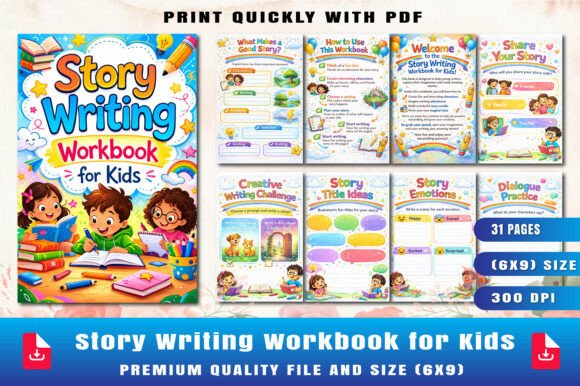
Inside, kids will find dedicated spaces for brainstorming story ideas, designing characters, choosing settings, and mapping out a plot. Each section builds on the last, helping the young author construct a narrative piece by piece. The workbook recognizes that creativity isn't always linear, so it includes flexible pages that allow for jumping around based on inspiration. The bright, kid-friendly design featuring stars, pencils, books, and playful borders keeps the tone light and encouraging throughout the entire journey. It transforms what could feel like schoolwork into an exciting personal project.
Unlocking Creativity in Reluctant and Enthusiastic Writers Alike
One of the most appealing aspects of this resource is its ability to meet children where they are. For the reluctant writer who finds the act of putting words on paper to be a struggle, the workbook offers low-stakes entry points. Drawing pages for characters and scenes allow them to express their ideas visually before they ever have to write a single sentence. The playful prompts give them direct jumping-off points, eliminating the dreaded "I don't know what to write."
For the enthusiastic writer who already loves to tell tales, the workbook provides a framework to refine their skills. It encourages them to think more deeply about their characters' motivations, the logic of their story world, and the flow of their dialogue. By introducing concepts like story mapping and checklists in a gentle, non-academic way, it helps them develop a stronger sense of structure. In both cases, the workbook builds confidence. It makes the child feel capable and in control of their own creative project.
Practical Ways to Use the Workbook in Daily Life
The versatility of this workbook makes it a valuable tool in a variety of settings. It works well in structured educational environments, as well as in the relaxed atmosphere of a weekend morning at home.
In the Homeschool Environment
Homeschooling parents often look for resources that are comprehensive without being rigid. This workbook can serve as a complete writing unit for a semester. You can start with the brainstorming pages, spend a few days on character creation, and then move through the story map and writing pages at your child's own pace. It naturally integrates into language arts lessons and provides a tangible, finished product that can be included in a portfolio. Seeing their own published-style story boosts a child's sense of accomplishment immensely.
In the Classroom
For teachers, this workbook is an excellent resource for a writing center or a "Writer's Workshop" setting. It allows students to work independently while engaging deeply with the material. Teachers can use the dialogue practice sections for mini-lessons on punctuation and voice, or use the story map pages to visually teach plot structure. The workbook works well for early finishers who want a creative challenge, and it can also be used as a whole-class project where each student creates their own unique story over several weeks.
As a Family Activity
Beyond formal education, this workbook is a wonderful way for families to connect. Parents can sit down with their child and work through the pages together. Ask questions about the characters they are designing. Laugh at the silly story ideas. This shared creative time fosters a love of storytelling and shows children that their ideas are valued. It is also a fantastic screen-free activity that keeps kids engaged during travel, rainy afternoons, or summer breaks.
Key Features That Help Young Authors Succeed
Every section of the workbook serves a specific purpose in the storytelling process. Understanding these features helps adults guide children toward using the book most effectively.
- Story Idea Brainstorming Pages: These pages encourage divergent thinking. They present fun "what if" scenarios and prompts that help a child generate dozens of potential story ideas before choosing their favorite.
- Character Creation Worksheets: A story is only as strong as its protagonist. These worksheets ask simple questions about a character's appearance, personality, likes, dislikes, and fears. This practice helps kids create characters who feel real and relatable.
- Story Setting and World-Building Pages: Whether it is a magical kingdom or a backyard treehouse, the setting matters. These pages ask sensory questions about the world of the story, helping kids describe what it looks, sounds, and feels like.
- Story Map and Planning Pages: This is the structural backbone of the workbook. It introduces a simplified version of plot structure, helping kids plan a beginning, middle, and end for their story. It teaches them that stories need conflict and resolution without using intimidating literary terms.
- Dialogue Practice Sections: Many young writers struggle with writing conversations. These sections offer simple rules and fun exercises that teach how to use quotation marks and how to make characters sound different from one another.
- Drawing Pages for Characters and Scenes: Visual expression is a powerful confidence builder. These pages allow children to design their world visually, which often inspires richer written descriptions later on.
- Story Checklist and Reflection Pages: This is where the workbook teaches self-assessment. After finishing a story, kids can check their work against a simple list. Did you include a setting? Does your story have a problem? This gentle review process builds important editing habits early on.
- Congratulations Page: Completing a story is a major achievement for a child. The dedicated congratulations page provides a moment of celebration and pride, reinforcing their identity as a "published" author.
Important Things to Consider Before Getting Started
While the workbook is designed to be intuitive, a little forethought can help maximize its impact.
First, consider the child's reading and writing level. The workbook is best suited for children who have basic writing skills and can form sentences independently, typically in the early to middle elementary years. For younger children, an adult may need to act as a scribe, writing down the stories the child dictates based on their drawings.
Second, pacing is important. The goal is to nurture a love of storytelling, not to rush through the workbook. It is perfectly fine to spend an entire session just drawing a character or brainstorming silly ideas. Let the child lead the pace. If they want to skip the map and start writing, let them. The workbook is a flexible tool, not a strict curriculum.
Finally, the role of the adult is crucial. While a child can certainly use the workbook on their own, the experience is richer when an adult shows genuine interest. Ask questions about the choices they are making. Celebrate their creativity. When a child struggles with a part of the story, use the workbook as a conversation starter. "What does your character want more than anything?" This kind of guided interaction turns the workbook into a collaborative experience.
Building a Foundation for a Lifelong Love of Writing
The ultimate value of the Story Writing Workbook for Kids extends far beyond the pages it contains. It provides a positive, structured first experience with creative writing. By breaking down a complex task into joyful steps, it teaches children that they are capable of creating something meaningful. It shows them that their ideas matter and that they have the tools to express them. Whether used in a classroom, a homeschool co-op, or a cozy family room, this workbook plants a seed. With gentle guidance and encouragement, that seed can grow into a lifelong habit of creative expression, clear thinking, and confident communication. For any adult looking to support a young storyteller, this workbook offers a simple and effective way to get started.