How the Kids Online Activity Log Helps Families Build Healthier Screen Habits
In today’s digital world, children are spending more time online than ever before. Between school assignments, video calls with friends, educational apps, and entertainment platforms, screens have become a central part of daily life. While the internet offers incredible opportunities for learning and connection, it also raises legitimate concerns about screen time, content quality, and healthy boundaries. Many parents find themselves asking the same question: How do we guide our children toward balanced, mindful online activity without creating conflict or resistance?
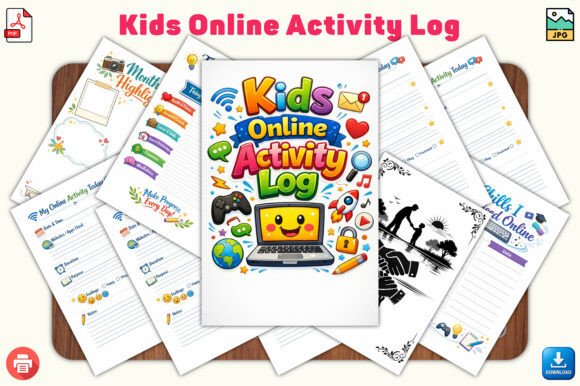
One practical solution that is gaining traction among families, educators, and guardians is the Kids Online Activity Log. This thoughtfully designed 35-page journal transforms screen monitoring from a chore into a collaborative, rewarding experience. Far more than a simple tracker, this log helps children and parents work together to record online habits, reflect on digital experiences, and celebrate progress. In this article, we will explore what the Kids Online Activity Log is, why it matters, how it fits into modern family life, and how you can use it to foster a healthier relationship with technology.
What Is the Kids Online Activity Log?
At its core, the Kids Online Activity Log is a structured journal that helps children and parents monitor online habits in a positive, engaging way. It is not a surveillance tool or a punishment system; rather, it is a guided framework for self-awareness and growth. The log includes 35 pages of daily, weekly, and monthly tracking activities designed to make screen reflection natural and fun.
The journal is built around the idea that awareness leads to better choices. By recording which websites they visit, how much time they spend on different apps, and how they feel during and after screen time, children develop a clearer picture of their digital lives. Parents, in turn, gain insight into their child’s online world without hovering or nagging. The result is a shared understanding that supports healthier habits over time.
Why Tracking Online Activity Matters for Children
It is easy to assume that children are naturally adept at managing their own screen time. After all, they have grown up with smartphones, tablets, and laptops. However, research consistently shows that children benefit from structured guidance when it comes to digital media. Their brains are still developing impulse control, emotional regulation, and the ability to self-monitor. This is where an activity log becomes invaluable.
Tracking online activity serves several important purposes:
- Builds self-awareness: When children record what they do online, they begin to notice patterns. They may realize they spend more time on games than they thought, or that certain apps leave them feeling tired or anxious.
- Encourages reflection: Weekly and monthly reviews help children think critically about their digital choices. They start asking questions like “What did I learn this week?” or “Could I use my time differently?”
- Promotes open communication: The log creates a natural opportunity for parents and children to talk about online experiences without judgment. It becomes a conversation starter rather than a confrontation.
- Reinforces positive behavior: Reward charts and certificates of completion turn healthy screen habits into achievements. Children feel proud when they meet their goals, which motivates them to continue.
- Supports skill development: Over time, the log helps children learn time management, goal setting, and self-discipline—all skills that serve them well beyond the digital realm.
Perhaps most importantly, the log shifts the focus away from restriction and toward empowerment. Instead of being told “you can’t do that,” children learn to ask themselves “is this a good use of my time right now?” That internal question is a sign of emerging maturity and self-regulation.
How the Log Fits Into Modern Family Life
Modern families are busy. Between work, school, extracurricular activities, and household responsibilities, finding time for yet another parenting task can feel overwhelming. The Kids Online Activity Log is designed to fit seamlessly into existing routines without adding pressure or complexity.
Here is how it works in practice:
- Start with a conversation. Introduce the log to your child as a tool for exploring online habits together. Emphasize that it is not a test or a punishment—it is a shared project.
- Use the daily pages. Each day, your child fills in a simple entry: websites or apps visited, time spent, and a quick note about how they felt. This takes just a few minutes and can be done before or after screen time.
- Review together weekly. Set aside ten minutes each week to look at the weekly reflection page. Talk about what was fun, what was learned, and whether there are any patterns worth noticing.
- Celebrate with reward charts. When your child consistently meets their goals (e.g., limiting game time to one hour per day, or trying a new educational app), they earn rewards. This keeps motivation high and builds positive associations with self-management.
- Use the monthly review as a checkpoint. Each month, the log provides a broader perspective. Which skills improved? Which areas need more attention? This is a great time to adjust goals as your child grows.
- Complete the certificate. After filling the log over time, your child receives a Certificate of Completion. This is a tangible celebration of their effort and progress—something they can be genuinely proud of.
The beauty of this system is that it adapts to each family’s unique situation. Whether you have a young child just starting to explore the internet independently, or a pre-teen who is already deeply engaged with social media and gaming, the log provides a flexible framework that meets children where they are.
What’s Inside the Kids Online Activity Log
The log is packed with thoughtfully designed sections that keep children engaged while promoting meaningful reflection. Here is a closer look at the key components:
📅 Daily Activity Pages
These pages form the backbone of the log. Each day, children record the websites and apps they used, how much time they spent, and how they felt during the experience. The simple format makes it easy for even young children to participate, especially with the help of kid-friendly icons and symbols. Over time, these daily entries reveal patterns that might otherwise go unnoticed.
⭐ Weekly Reflections
At the end of each week, children look back on their favorite online activities and reflect on what they learned. This section encourages them to think about whether their digital time was enriching, relaxing, or perhaps not as valuable as they hoped. The weekly reflection also helps parents identify positive experiences they can encourage further.
🏆 Reward Charts
Positive reinforcement is a powerful motivator for children. The reward charts in the log allow you to set specific goals—such as sticking to a time limit or trying a new educational app—and track progress visually. When children see their achievements piling up, they feel a genuine sense of accomplishment.
💡 Monthly Reviews
Once a month, the log provides a broader perspective. Children assess their overall progress, identify skills they have developed, and note areas where they would like to improve. This long-term view helps them understand that healthy screen habits are not about perfection but about continuous growth.
🎉 Certificate of Completion
Completing the log is a milestone worth celebrating. The Certificate of Completion is a simple but meaningful way to honor your child’s effort. It reinforces the idea that managing one’s online life is a valuable skill—and that hard work pays off.
Design Features That Make It Work
The effectiveness of a journal depends not just on what it contains, but on how it is presented. The Kids Online Activity Log is designed with both children and parents in mind. Its clean 6×9 inch layout is perfect for printing at home or for publishing through platforms like KDP. The minimal color palette on a white background ensures easy readability and makes the log feel calm, not cluttered.
Kid-friendly icons and symbols are sprinkled throughout the pages to make logging feel more like a game than a chore. These visual cues help children who are not yet strong readers participate independently. The log also comes in both JPG and PDF formats, giving families the flexibility to print individual pages, use it digitally on a tablet, or bind it as a physical book.
Common Misunderstandings About Screen Tracking
Some parents worry that keeping a log of their child’s online activity will feel intrusive or adversarial. This is a natural concern, but it stems from a misunderstanding of what the log is meant to do. The Kids Online Activity Log is not about spying or controlling. It is about collaboration. When presented as a shared tool for learning and growth, children are far more likely to embrace it.
Another common assumption is that tracking screen time is unnecessary if a child is already doing well in school and seems happy. But even well-adjusted children can fall into unhelpful digital habits without realizing it. The log provides a gentle check-in that catches small imbalances before they become bigger problems. It is preventive, not reactive.
Finally, some parents worry that the log will add more work to their already busy schedule. In reality, the log is designed to take only a few minutes per day. The long-term benefits—fewer arguments about screen time, better communication, and a child who can self-regulate—far outweigh the small time investment.
Practical Tips for Getting Started
If you are considering using the Kids Online Activity Log with your own family, here are a few suggestions to make the experience positive and effective:
- Involve your child from the beginning. Let them choose their own log cover or decorate it. The more ownership they feel, the more engaged they will be.
- Set realistic goals. Start with simple targets (e.g., one hour of educational content per day) rather than trying to overhaul all screen habits at once.
- Be consistent but flexible. Try to fill in the log at the same time each day—perhaps right after dinner or before bed. But if life gets busy, don’t stress. The log is there to help, not to create pressure.
- Celebrate small wins. Every time your child meets a goal or completes a week of logging, acknowledge it. A word of praise or a small reward goes a long way.
- Use the log as a conversation starter. When you see an interesting pattern in your child’s entries, ask about it. “I noticed you really enjoyed that science video. What did you learn?” This keeps the dialogue open and positive.
Conclusion: A Tool for Growth, Not Control
The Kids Online Activity Log is more than a notebook—it is a gentle guide toward mindful, balanced technology use. By helping children track their online activity, reflect on their digital experiences, and celebrate their progress, it transforms screen management from a source of conflict into a shared family value.
In an age where screens are everywhere, teaching children to navigate the digital world with awareness and confidence is one of the most important skills we can offer. The log provides a structure that makes that learning process natural, rewarding, and even fun. Whether you are a parent, teacher, or guardian, this simple tool can help you guide the young people in your life toward healthier habits that will serve them well into the future.
If you are ready to take a proactive, positive approach to your child’s online activity, the Kids Online Activity Log is a wonderful place to start. Track. Reflect. Grow. The journey toward digital balance begins with a single page.