Master Your Garden's Health: The Complete Guide to Using a Garden Pest Problem Tracker
Every gardener knows the feeling: you step outside one morning, coffee in hand, ready to admire your thriving plants, and instead you spot chewed leaves, sticky residue, or a mysterious yellowing that wasn't there yesterday. Garden problems can appear suddenly, and without a clear system for tracking them, it's easy to feel overwhelmed. That's where a Garden Pest Problem Tracker becomes an invaluable tool — not just for identifying issues, but for understanding patterns, making smarter decisions, and ultimately growing a healthier, more productive garden.
In this article, we'll explore what a garden pest problem tracker is, why it matters for gardeners of all skill levels, how to use one effectively, and how it fits into a modern, mindful approach to gardening. Whether you're a beginner just learning to spot an aphid infestation or an experienced grower looking to refine your organic pest management strategy, this guide will help you see your garden — and its challenges — with fresh eyes.
What Is a Garden Pest Problem Tracker?
At its simplest, a Garden Pest Problem Tracker is a structured system — often a printable workbook, journal, or digital log — that helps you record, monitor, and analyze problems in your garden. Think of it as a health record for your plants. Instead of relying on memory or reacting to problems after they've spiraled, the tracker encourages you to observe regularly, note changes, and connect the dots over time.
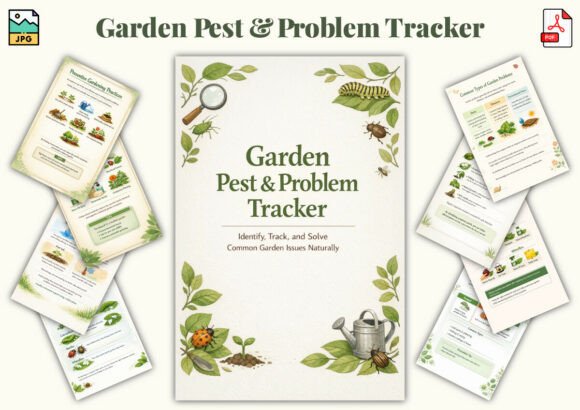
The best trackers, like the Garden Pest Problem Tracker – Printable Workbook 6×9 Inches, include dedicated sections for pest identification, plant disease notes, weekly and monthly review pages, observation logs, and quick-reference guides. They transform scattered observations into a coherent record you can use season after season.
Purpose and Significance
The primary purpose of a pest problem tracker is early detection. When you consistently log what you see — a few discolored leaves, a sticky film on stems, tiny webs under foliage — you begin to notice subtle shifts before they become full-blown infestations. Over time, this practice helps you:
- Identify recurring pest problems in specific areas of your garden
- Recognize which treatments work best for particular issues
- Understand how weather, watering, and soil health influence pest pressure
- Build a personalized reference library of your garden's unique challenges
- Reduce reliance on broad-spectrum pesticides by targeting problems early and precisely
For organic gardeners especially, tracking is essential. Without chemical crutches, you need sharp observation and timely intervention — and a tracker gives you both.
Why Modern Gardeners Need a Tracking System
We live in an age of information overload. Between social media gardening tips, conflicting advice from online forums, and the sheer number of plant species we might be growing, it's easy to lose track of what's actually happening in our own backyards. A pest problem tracker cuts through the noise. It brings your attention back to your soil, your climate, your specific plants.
Moreover, modern gardening is increasingly science-informed and data-driven. Hobbyists and small-scale growers are adopting tools once reserved for commercial farms: taking notes on pest life cycles, correlating temperature spikes with disease outbreaks, and logging beneficial insect activity. A well-designed tracker makes this accessible to anyone, even if you only have a few pots on a balcony.
Fitting into Daily Life
A good tracker doesn't add to your workload — it streamlines it. You might spend five minutes each morning or evening walking through your garden, jotting down observations. Over a week, that's less than an hour of investment that can save you from losing an entire crop to squash bugs or powdery mildew. Many gardeners find the practice meditative, a way to slow down and connect more deeply with their plants.
Printable workbooks, especially in the convenient 6×9 inch format, are designed to fit into a garden bag, sit on a shelf, or tuck into a notebook. They're portable, low-tech, and always ready when you are. No app subscription, no battery anxiety — just paper and pen.
What a Comprehensive Pest Tracker Includes
Not all trackers are created equal. A truly useful one goes beyond a simple log sheet and provides a complete framework for garden health management. The Garden Pest Problem Tracker – Printable Workbook includes 26 thoughtfully designed pages, each serving a specific purpose. Here's what you can expect to find in a quality tracker, and why each section matters.
Welcome Instructions and Orientation Pages
These pages set the stage. They explain how to use the tracker, what to look for during inspections, and how to interpret your notes. For beginners, this is invaluable context. For experienced gardeners, it's a helpful reminder to stay thorough.
Pest Identification Guides
A good tracker includes visual and descriptive references for common pests — aphids, spider mites, whiteflies, thrips, caterpillars, slugs, and more. These guides help you distinguish between a harmless visitor and a genuine threat. They also explain which life stages to watch for (eggs, nymphs, adults) and which plants are most vulnerable.
Plant Disease Explanations
Pests often bring diseases, and environmental conditions can create disease problems even without insects. Sections on powdery mildew, blight, root rot, and leaf spot help you diagnose symptoms accurately. Many gardeners mistake nutrient deficiencies for disease, or vice versa; a good tracker clarifies the differences.
Tracking Worksheets and Logs
This is the heart of the workbook. Each log page prompts you to record the date, plant affected, symptoms observed, pest or disease identified, treatment applied, and results. Over time, these logs become a powerful reference. You can look back and see, "Ah, last year I sprayed neem oil on cucumbers for aphids in early June — it worked within a week." Or, "Every August, I get leaf miners on spinach. I need to start floating row covers in July."
Weekly and Monthly Review Pages
These pages encourage you to step back from the daily details and look at the bigger picture. What trends are emerging? Are problems concentrated in one bed? Did a particular treatment reduce pest numbers? Reflection turns raw data into wisdom.
Observation and Treatment Trackers
More granular than the main logs, these pages let you track a single pest or disease over time, noting changes after each intervention. They're especially useful for persistent issues like squash vine borers or tomato hornworms.
Quick Reference Guides
When you're in the garden with dirty hands, you don't want to flip through a textbook. Quick reference pages summarize the most common problems at a glance, with simple icons, color codes, or bullet points. These are the pages you'll dog-ear and revisit season after season.
Notes and Reflection Pages
Some of the most valuable insights come from unstructured observation. Maybe you noticed more ladybugs after planting dill nearby, or you realized that watering in the morning reduced fungal issues. Reflection pages give you space to capture those "aha" moments.
How to Use a Garden Pest Problem Tracker Effectively
Having a beautiful tracker is one thing; using it consistently is another. Here's a practical workflow that works for most gardeners.
Step 1: Set a Regular Inspection Routine
Choose a time of day — early morning or late evening is ideal — and walk through your garden with intention. Look at the undersides of leaves, check new growth, and examine stems and soil. Spend 10–15 minutes if you can. Make this a habit, like brushing your teeth.
Step 2: Record What You See, Even If You're Not Sure
Don't wait until you have a definitive diagnosis. Write down exactly what you observe: "Small, pale green insects clustered on new tomato shoot. Leaves slightly curled." Later, you can consult your identification guide. The act of writing sharpens your attention and builds your diagnostic skills.
Step 3: Use the Identification Guides
Compare your notes with the pest and disease references in your tracker. If you're still unsure, take a photo and ask at your local extension office or a trusted gardening community. Over time, you'll recognize common problems instantly.
Step 4: Choose a Targeted Treatment
Once you've identified the problem, decide on an intervention. The tracker can help you document what you tried — insecticidal soap, neem oil, handpicking, companion planting, or simply leaving beneficial predators alone. Record the date, dosage, and method.
Step 5: Follow Up and Review
Check back in 48–72 hours and note whether the problem improved, stayed the same, or worsened. Use the weekly and monthly review pages to spot larger trends. By the end of the season, you'll have a detailed history that tells you exactly what works for your garden.
Common Misunderstandings About Garden Pest Tracking
Many gardeners assume that tracking is only for serious growers or that it's too time-consuming. Others think they can just "remember" what happened last year. Here are a few misconceptions worth clearing up.
- "I don't have a pest problem, so I don't need a tracker." Actually, a tracker helps you notice small issues before they become big ones. It's a preventive tool, not just a reactive one.
- "Writing things down takes too long." A five-minute daily log is faster than dealing with an uncontrolled infestation. And with a printable workbook designed for quick entry, it's easy to stay brief.
- "All pests are bad." Many insects are neutral or beneficial. A tracker helps you distinguish between a pest and a predator, so you don't accidentally harm helpful species.
- "If I use organic methods, I don't need to track." Organic gardening actually requires more observation because you're working with biological cycles rather than chemical fixes. Tracking is essential for timing interventions correctly.
Why a Printable Workbook Is a Smart Choice
In a world of apps and digital everything, a physical workbook offers distinct advantages. It never runs out of battery, it doesn't distract you with notifications, and it can be used right in the garden without worrying about dirt or moisture (a pencil and a plastic sleeve cover go a long way). The 6×9 inch format is particularly practical: large enough to write in comfortably, small enough to carry easily. Plus, many gardeners find that handwriting observations helps them remember and process information more deeply than typing.
The soft, nature-inspired design of the Garden Pest Problem Tracker – Printable Workbook makes it pleasant to use — and when something is pleasant, you're more likely to stick with it. That consistency, more than any single tool or trick, is what transforms your gardening practice.
Building a Broader Understanding Over Time
The real power of a garden pest problem tracker isn't just in solving today's aphid problem. It's in how it changes the way you see your garden. After a season of tracking, you start to recognize the early warning signs of an outbreak. You learn which plants are naturally resistant in your area. You notice that certain weather patterns precede certain diseases. You become a more patient, observant, and effective gardener — not because you memorized facts, but because you built a relationship with your own growing space.
For home gardeners, organic enthusiasts, and plant lovers of all kinds, a tracker is a simple investment that pays dividends in healthier plants, less waste, and deeper satisfaction. It turns gardening from a series of reactive emergencies into a thoughtful, ongoing conversation with the natural world.
Final Thoughts
Whether you're battling tomato hornworms, puzzling over mysterious leaf spots, or simply trying to stay ahead of the inevitable garden surprises, a Garden Pest Problem Tracker gives you structure and clarity. It's not about perfection — it's about progress. Every entry you make is a small step toward understanding your garden better.
If you're ready to take control of your garden's health, consider starting with a dedicated tracker like the Garden Pest Problem Tracker – Printable Workbook 6×9 Inches. With its clear layout, practical worksheets, and beautiful design, it's a tool you'll reach for all season long — and one that will make you a more confident, capable gardener season after season.