Strategic Financial Planning with the 2026–2027 Budget Organizer Planner
Managing personal or business finances across a two-year horizon requires more than good intentions. It demands structure, consistency, and a system that aligns daily decisions with long-term goals. The 2026–2027 Budget Organizer Planner is designed not as a passive logbook, but as an active decision-making tool. Whether you are an entrepreneur tracking seasonal cash flow, a freelancer managing irregular income, or a professional aiming to build savings while servicing debt, this planner provides the scaffolding to turn financial intentions into measurable outcomes.
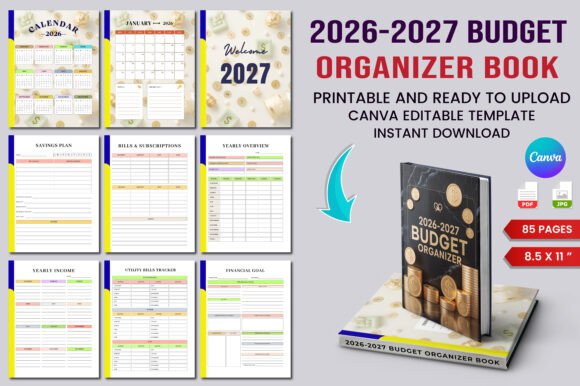
What makes the 2026–2027 Budget Organizer Planner strategically useful is its combination of macro and micro views. You get monthly and yearly calendars for forward-looking planning, plus detailed trackers for expenses, savings, bills, subscriptions, insurance, tax deductions, and even niche items like online shopping and sinking funds. This breadth allows you to customize your financial system around your specific realities. You are not forced into a one-size-fits-all template—instead, you select the tools that match your current priorities, whether that means launching a debt snowball or funding a vacation fund.
Beyond Tracking: Using the Planner to Support Goals and Decisions
The real value of the 2026–2027 Budget Organizer Planner emerges when you use it as a pre-decision lens. Before making a purchase, committing to a subscription, or taking on new work, you consult your planner’s expense tracker and upcoming bills section to see the full picture. This shifts you from reactive spending to proactive resource allocation. For marketers and creators whose income fluctuates, the yearly income and yearly overview pages help you anticipate lean months and plan content launches or campaigns accordingly.
Consider the savings challenges embedded in the planner: the 10, 15, 20, and 25 savings challenges, plus the 10,000 in 52 weeks challenge. These are not gimmicks—they are behavioral design tools that break large goals into weekly or incremental targets. When you approach a savings challenge with a clear purpose (e.g., building an emergency fund or saving for equipment), the act of tracking becomes intrinsically motivating. The planner’s savings jar and savings tracker pages give you a visual feedback loop, reinforcing progress and making the abstract feel tangible.
For educators and small business owners, the budget planner and budget tracker sections serve as communication and accountability tools. You can use them to align spending with departmental or business priorities, or to demonstrate fiscal responsibility to stakeholders or lenders. The quarterly bills tracker and utility bills tracker help you avoid late fees and maintain good credit—a small operational detail that has outsized long-term effects on your financial health.
Strategic Use Cases: When to Rely on This Type of Planner
The 2026–2027 Budget Organizer Planner is most valuable when you face sustained financial complexity. This includes periods of income volatility (common among freelancers and hobbyists), during major life transitions (buying a home, starting a business, changing careers), or when you are actively working to restructure debt. The debt snowball tracker is one of the most impactful pages because it turns a psychological burden into a manageable sequence of actions. By listing each debt and celebrating small wins, you maintain momentum.
Another high-leverage use case is tax planning. The tax deduction and donation tracker pages allow you to record deductible expenses throughout the year rather than scrambling at tax time. For creators and publishers who earn from multiple streams—like affiliate income, sponsorships, or product sales—the credit card information and bank account pages help separate business and personal finances in one place. This reduces errors and supports cleaner bookkeeping.
The planner also supports operational efficiency. The monthly bill tracker and subscriptions list help you identify unused services that are draining cash flow. A quick quarterly review using the quarterly bills tracker can reveal opportunities to renegotiate rates or cancel redundant tools. For retailers and online shop owners, the online shopping tracker helps separate personal purchases from business inventory, preventing confusion and ensuring accurate profit calculations.
Practical Planning Tips to Maximize the Planner’s Impact
Start by completing the yearly overview and yearly income pages at the beginning of each year. This sets your baseline. Then, each month, use the monthly budget sheet to project income and allocate spending before the month begins. After the month ends, reconcile actual spending using the expense tracker. This cyclical process—plan, execute, review—builds financial literacy over time.
Leverage the checkbook register and net worth pages once per quarter. Trends in net worth (assets minus liabilities) give you a high-level health check. If your net worth stalls or declines, drill into the expense tracker and debt snowball to identify leaks. Use the sinking funds page to plan for infrequent but predictable expenses like vehicle maintenance or annual insurance premiums, so they don’t become emergencies.
For the savings challenges, choose one that stretches you without breaking your budget. The 10,000 in 52 weeks challenge requires about $192 per week—a significant commitment. Pair it with the savings tracker and savings jar pages to stay motivated. If you miss a week, adjust the remaining weeks rather than abandoning the goal. The planner’s flexible structure accommodates these adjustments.
What to Consider Before Relying on This Planner
No planner is a substitute for honest self-assessment. One risk of using the 2026–2027 Budget Organizer Planner without clear goals is that it becomes a data repository without action. You might fill in numbers but never review them. To avoid this, schedule a recurring weekly or monthly review session—treat it as a non-negotiable meeting with yourself or your household. Another risk is tracking too many categories at once. The planner offers dozens of trackers. Trying to use all of them simultaneously can lead to fatigue and abandonment. Instead, rotate sections based on your current priorities. This quarter, perhaps you focus on the budget planner, expense tracker, and debt snowball. Next quarter, you might shift to savings challenges and retirement tracker.
Also consider the digital vs. paper balance. While a physical planner offers focus and freedom from screens, you may need a complementary digital system for automatic transaction imports. Use the planner for strategic planning and manual reflection, and use your bank’s app or a simple spreadsheet for raw data capture. The combination reduces errors and preserves the tactile benefit of writing.
Another subtle risk: planners can create an illusion of control if you ignore behavioral patterns. Tracking spending is useful, but if you do not address the underlying habits driving overspending, the planner becomes a record of problems rather than a solution. Use the no spend challenge and spending tracker pages not merely to log, but to identify emotional triggers or unnecessary categories you can cut. Pair the planner with periodic financial check-ins where you ask: “What is this expense really costing me in terms of my freedom or future plans?”
Using the Planner Intentionally for Long-Term Results
Intentional use starts with clarity about your “why.” A small business owner using the vacation budget page might be saving for a client retreat. A creator using the retirement savings and retirement tracker pages is ensuring they can continue producing work into later decades. Connect each tracker to a specific life outcome. Write your goal at the top of the page. For example, “This sinking fund is for the new camera system in Q3 2027.” The planner’s future goals section is designed for this exact purpose—use it as your north star.
Consider integrating the planner into team or family discussions. If you co-manage finances with a partner or business partner, schedule a monthly meeting where you walk through the monthly budget, expense tracker, and financial goals pages together. This aligns expectations and reduces friction. The insurance tracker and utility bills tracker become shared accountability tools rather than personal nag lists.
Finally, remember that the 2026–2027 Budget Organizer Planner spans two full years. This long horizon encourages thinking in terms of seasons, not just months. Use the yearly calendars to identify patterns—like income spikes during holiday seasons or slow periods in summer—and plan your marketing, content production, or business operations accordingly. The yearly income page becomes a strategic foresight tool, not just a historical record.
Conclusion Without Conclusion: Embedding the Planner into Your Financial System
A planner only delivers value if it is used regularly and reviewed critically. The 2026–2027 Budget Organizer Planner offers the structure; your discipline and strategic thinking provide the engine. By starting with clear goals, rotating your focus among its many trackers, and coupling it with honest reflection, you can transform a stationary tool into a dynamic financial partner. For entrepreneurs, professionals, creators, and anyone navigating the complexity of modern money, this planner is a solid foundation for building financial clarity, one month at a time.