Unlocking Self-Discovery Through Guided Reflection
In a world that constantly demands your attention, slowing down to simply think can feel like a luxury you cannot afford. Yet within the quiet moments of honest reflection, some of the most meaningful insights about who you are and why you do what you do begin to surface. A guided approach to journaling offers structure without rigidity, creating space for thoughts to unfold naturally while gently steering you toward deeper understanding. The Life Insight Prompts journal is designed precisely for this purpose — a tool that transforms scattered thoughts into coherent self-knowledge.
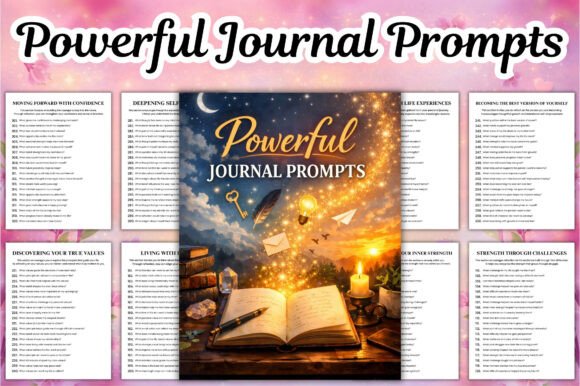
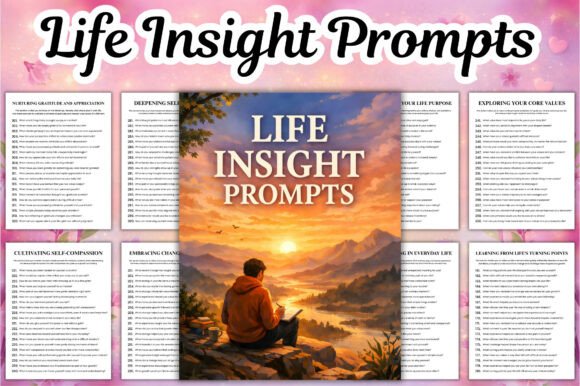
Inside this thoughtfully crafted workbook, you will find 320 prompts that do not ask for simple answers. Instead, they invite you to sit with your experiences, examine them from fresh angles, and extract wisdom from moments you may have overlooked. Whether you are new to journaling or have filled dozens of notebooks, this printable reflection workbook provides a framework that keeps the process both meaningful and sustainable.
Why Guided Prompts Work Better Than Blank Pages
There is a common misconception that creative freedom means starting from nothing. For many people, a blank page induces paralysis rather than inspiration. Guided prompts remove that barrier by offering a starting point — a question, a scenario, a gentle nudge that gets the pen moving. When you use Life Insight Prompts, you are not being told what to think. You are being shown where to look. That small shift in direction can make all the difference between abandoning a journal after three days and building a lasting reflective practice.
The prompts within this workbook are organized into distinct reflective sections, each targeting a different dimension of personal growth. You will find prompts that explore life lessons learned the hard way, prompts that help you clarify your core values, and prompts designed to tune into your inner voice. This structure ensures that over time, you build a holistic picture of yourself — not just one narrow slice.
Consider the difference between asking yourself “What am I grateful for?” each day and working through a series of gratitude prompts that ask you to recall specific moments, sensory details, and the emotions tied to those experiences. The latter generates richer insights because it requires you to go deeper. That is the philosophy behind every prompt in this journal.
Connecting Life Lessons to Personal Growth
Every experience you have ever had — whether joyful, painful, confusing, or mundane — holds a lesson. The challenge is not that the lessons are absent; it is that they often remain hidden beneath the noise of daily life. The Life Insight Prompts journal helps you excavate those lessons with intention. By reflecting on past events through the lens of curiosity rather than judgment, you begin to see patterns that were previously invisible.
For example, a prompt in the life lessons section might ask you to think about a time when you made a decision that felt wrong at the moment but later proved to be exactly what you needed. Sitting with that question leads you to recognize how discomfort and growth are often intertwined. Over weeks and months of such reflection, you develop a more compassionate understanding of your own journey.
This process is not about assigning blame or revisiting old wounds without purpose. It is about gathering evidence — evidence of your resilience, your values, your blind spots, and your untapped strengths. When you approach personal growth this way, it becomes less about fixing what is broken and more about honoring what is already there while gently expanding your awareness.
Understanding Your Inner Voice and Intuition
Many people struggle to distinguish between their inner voice and the noise of external expectations. That quiet knowing that whispers when you are at a crossroads is easy to dismiss when life is moving fast. The prompts dedicated to inner voice and intuition in this workbook are crafted to help you slow down enough to hear that whisper clearly.
You might be asked to recall a moment when you ignored your gut feeling and what happened as a result. Or you might be prompted to describe a situation where following your intuition led to an unexpected positive outcome. These exercises train you to recognize the signature of your own inner guidance — its tone, its timing, its reliability. Over time, you become more confident in trusting yourself, even when the path ahead is unclear.
This section of the journal is particularly valuable for anyone who tends to overthink or second-guess their choices. By documenting instances where your intuition was correct, you build a personal archive of evidence that strengthens your self-trust. The more you practice, the more natural it becomes to consult your inner voice as a primary source of wisdom.
Clarifying Core Values and Life Purpose
Knowing what you truly value is the foundation of a life that feels authentic. Yet many people go through their days acting on borrowed values — what their family expects, what society rewards, what seems practical at the time. The prompts in the core values and life purpose sections of Life Insight Prompts help you separate what is genuinely yours from what you have absorbed from your environment.
A prompt might ask you to write about a moment when you felt completely aligned with your values, describing the circumstances and how it felt in your body. Another might challenge you to identify a value you claim to hold but rarely act on, and explore what stands in the way. These are not comfortable questions, but they are necessary ones. The discomfort they generate is productive — it signals that you are touching something real.
Life purpose is not a static destination. It shifts as you grow, learn, and encounter new experiences. The journal treats purpose as a living question rather than a final answer. Through regular reflection, you begin to notice the activities, relationships, and causes that energize you versus those that drain you. Over time, a clearer sense of direction emerges from this accumulated self-knowledge.
The Role of Gratitude in Sustained Reflection
Gratitude is often reduced to a simple list of things you are thankful for. While that practice has value, the gratitude prompts in this workbook go a step further. They invite you to reflect on why certain people, experiences, or possessions matter to you. What need do they fulfill? What memory do they anchor? What would your life feel like without them?
This deeper form of gratitude reflection rewires your attention. Instead of scanning for positives in a superficial way, you begin to notice the richness already present in your everyday life. The journal encourages you to document small joys — a conversation that made you laugh, a meal that tasted especially good, a moment of unexpected kindness from a stranger. Over time, this practice shifts your baseline perception toward abundance rather than scarcity.
Gratitude, when practiced with depth, also serves as an antidote to comparison. When you are genuinely grounded in appreciation for what is yours, the achievements and possessions of others lose their power to make you feel inadequate. That emotional freedom is one of the most valuable outcomes of consistent journaling with thoughtful prompts.
Building a Sustainable Daily Reflection Routine
A journal filled with 320 prompts is a long-term companion, not a quick fix. The key to getting the most from Life Insight Prompts is consistency over intensity. You do not need to write pages every day. Even five minutes of focused response to a single prompt can yield surprising clarity. The printable format makes it easy to keep a copy wherever you tend to reflect — beside your bed, in your bag, at your desk.
One practical approach is to choose a section that resonates with your current season of life and work through it slowly. If you are navigating a transition, the life purpose prompts might be most relevant. If you are healing from a difficult experience, the life lessons section can offer a safe space to process. The journal does not prescribe a linear path, which allows your reflection to stay aligned with your actual needs.
Another recommendation is to revisit prompts after several weeks or months. Your answers will change as you change. Seeing that evolution on the page is one of the most powerful aspects of keeping a guided journal. It provides concrete evidence of growth that you might otherwise miss in the flow of daily life.
Emotional Awareness and Pattern Recognition
One of the most practical benefits of using a guided reflection workbook is the way it trains you to recognize emotional patterns. When you regularly write about your reactions, triggers, and recurring thoughts, certain themes begin to emerge. You may notice that you feel anxious every time you receive feedback, or that you tend to withdraw when you feel misunderstood. Simply naming these patterns reduces their power over you.
The prompts in the self-awareness and personal growth sections are particularly effective for this kind of pattern recognition. They ask you to look at your behavior with curiosity rather than criticism. Why do you react a certain way in conflict? What belief is driving that reaction? Where did that belief originate? These questions do not aim to shame you; they aim to illuminate you.
Emotional awareness is not about controlling your feelings. It is about understanding them enough to respond intentionally rather than react automatically. Over time, the insights gained from this journal translate into better relationships, clearer communication, and a greater sense of inner stability. You become less reactive and more centered, even in challenging circumstances.
Who Benefits Most from This Approach
While anyone can benefit from guided reflection, certain people will find Life Insight Prompts especially valuable. If you are someone who processes thoughts better in writing than in conversation, this journal offers a private, judgment-free space to work through complexity. If you are in a period of transition — a career change, a relationship shift, a move to a new place — the prompts help you make sense of what is happening instead of just powering through.
The journal is also well-suited for those who have tried free-form journaling in the past but struggled to maintain it. The structure removes the question of “What should I write about today?” and replaces it with a clear, meaningful starting point. For coaches, therapists, and wellness practitioners, it can be a useful resource to recommend to clients who want to deepen their self-reflection practice between sessions.
There is no requirement to be a skilled writer or to have a certain amount of life experience. The prompts meet you where you are. Whether you are in your twenties exploring your identity or in your sixties reflecting on the arc of your life, the questions are designed to be relevant across stages and circumstances.
Practical Considerations for Getting Started
Because the journal is provided as a printable PDF, you have flexibility in how you use it. You can print the entire workbook and bind it, or you can select individual sections to work through one at a time. Some users prefer to keep a digital copy and write responses in a separate notebook. Others enjoy printing prompts on cardstock and using them as cards to draw at random. The format supports multiple styles of use depending on what feels most natural to you.
When starting out, it can help to set a simple intention — not a goal of completing all 320 prompts, but a commitment to showing up for one prompt each day or each week. The value accumulates slowly. After the first ten responses, you will already begin to notice shifts in how you think about your day. After fifty, patterns will start to become visible. By the time you have worked through a full section, you will have built a personal reference document of your own growth journey.
The most important factor is not how fast you move through the prompts, but how honestly you engage with them. The journal is a tool for self-discovery, not a test to pass. Give yourself permission to write imperfectly. Leave questions partially answered. Return to prompts later with a fresh perspective. The process itself is where the transformation lives.