The ADHD Self-Care Planner: A Practical Tool for Real Life
If you have an ADHD brain, you know the standard advice just doesn’t stick. “Just make a routine!” they say. “Just practice gratitude!” And you want to. You really do. But the gap between intention and execution feels like a canyon. Sometimes, self-care itself becomes another chore you’re failing at. The typical bullet journal feels intimidating, and a blank notebook leaves you staring at the page.
This is exactly where an intentionally designed tool comes in. Not a rigid journal full of empty guilt, but a scaffold. Something flexible, forgiving, and editable. Something you can pick up on a Tuesday when your executive dysfunction is winning.
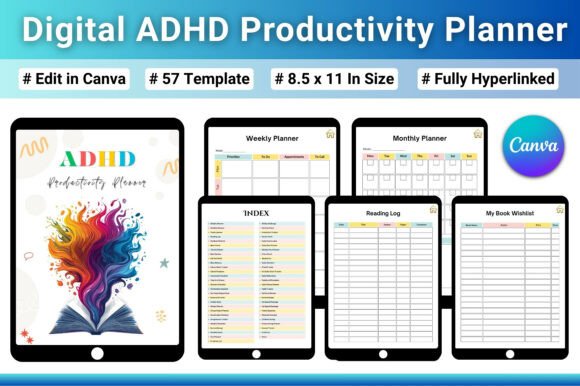
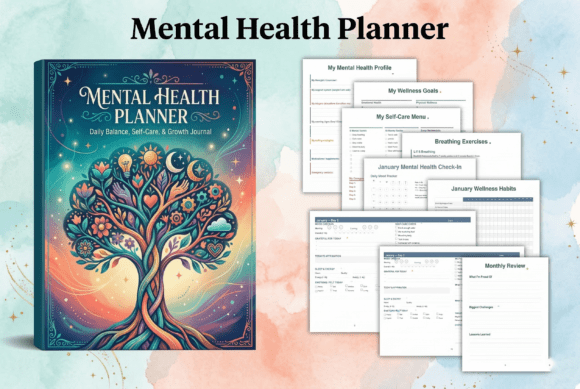
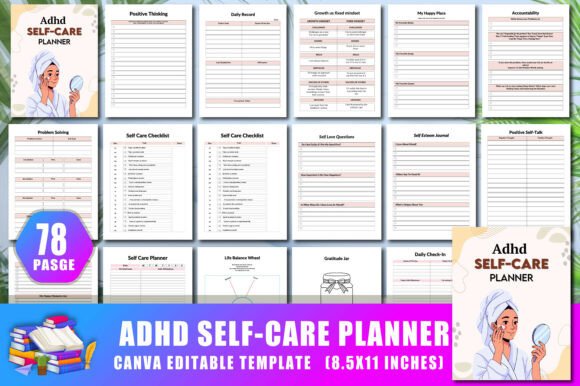
The Adhd Self Care Planner is a comprehensive Canva template and print-ready interior, built specifically for that scattered, non-linear, emotionally rich brain wiring. It contains everything from habit tracking and mood monitoring to deep-dive exercises like Fear Setting and Self-Love Journey prompts. But the real value isn’t in the long list of features—it’s in how you can actually use it in your real, chaotic, day-to-day existence.
What Makes This Planner Different
Before we dive into the “how,” let’s clarify the “what.” This isn’t a generic planner with “ADHD” slapped on the cover. The file includes specific worksheets that target executive dysfunction, time blindness, emotional regulation, and that crushing all-or-nothing mindset. Because it is designed for Canva, you have full control. You can add or remove anything. Don’t like the color scheme? Change it. Prefer a darker background? Done. Want to add twenty pages of Daily Gratitude and remove the Bucket List? Go ahead. This ability to customize is actually a feature of self-respect for the ADHD brain—it removes the friction of a tool that doesn’t fit your life.
For publishers and creators, the ready-to-upload PDF files are optimized for Amazon KDP. High-quality, print-ready, and professional. For the end user, the editable Canva link means it becomes a living document that evolves with your focus and mood.
Morning: Replacing Chaos with a Single Intention
Mornings with ADHD can feel like a wash. You wake up late, immediately scroll your phone, and feel a low-grade panic before you have even made coffee. The My Morning Self-Care Routine and Daily Manifest pages are not there to shame you into a 5 AM routine. Instead, they ask you to pick one thing. “Today, I will drink water before coffee.” “Today, I will manifest feeling calm.” You open the planner, fill in the small box for Affirmations—something simple like “I am allowed to start slow”—and check off one tiny Daily Gratitude item. This simple act of putting pen to paper creates an anchor. It sets a tone of agency rather than reactivity. It takes ten seconds, but it centers a scattered brain.
Midday Chaos: The Dopamine Dip and How to Navigate It
It is 2 PM. You have hit a wall. Your brain is fuzzy, you feel irritable for no clear reason, and you are doom-scrolling instead of working. This is the perfect moment for the Mindfulness Worksheet or Problem Solving page. Instead of letting the shame spiral take hold, you pause. The Mood Tracker helps you identify what you are feeling—not just “bad,” but specifically “overwhelmed” or “understimulated.” Then, the Fear Setting exercise comes into play. You ask yourself: “What is the worst that can happen if I stop working for twenty minutes? What is the best? What is the likely outcome?” This structured approach moves you from emotional spiral to logical action. It takes the shame out of the slump and gives you a practical off-ramp.
Evening: Replacing the Guilt Spiral with Reflection
The end of the day is often when the inner critic gets loudest. “You didn’t do enough. You wasted the day. You should be further along.” The Daily Reflection page and Self Love Questions journal are specifically designed to counter this narrative. Rather than a rigid scorecard, it prompts you to find one win and one lesson. The Self Esteem Journal section asks, “What did I do today that was brave?” It reframes the narrative around effort and courage rather than productivity. The Gratitude Jar prompt reminds you that gratitude isn’t toxic positivity; it is a grounding practice for a scattered mind. It helps you end the day with self-compassion instead of self-loathing.
The Freelancer and Creator
If you work for yourself, structure is your life raft. But too much structure feels suffocating. The Level 10 Life Inventory and Life Balance Wheel help you visually assess where your energy is going. Are you neglecting your health because you are hyper-focused on a client project? The Habit Tracker lets you build micro-habits—like standing up once an hour—without feeling like a corporate drone. The Accountability pages are game-changers for someone who has to answer only to themselves. They provide a gentle nudge without the judgment of a boss.
The Busy Parent or Educator
When you are constantly giving your energy to others, self-care feels impossible. You have no time for elaborate routines. The Self-Care Checklist and Daily Check-In are designed for speed. You can do them in under two minutes while your coffee brews. The My Happy Place and My Ideal Life pages give you a mental escape, a quick visualization that can reset your patience before a challenging meeting or a difficult conversation with a child.
The Blogger or Content Creator
You need to show up authentically, but you also need a sense of self-worth that is not tied to analytics. The Positive Self-Talk and Growth vs Fixed Mindset pages provide the raw material for personal stories that readers actually connect with. The Self-Care Ideas and Self-Care Planner pages can even be repurposed into social media content, sharing your process with an audience who craves the same structure.
The Small Business Owner
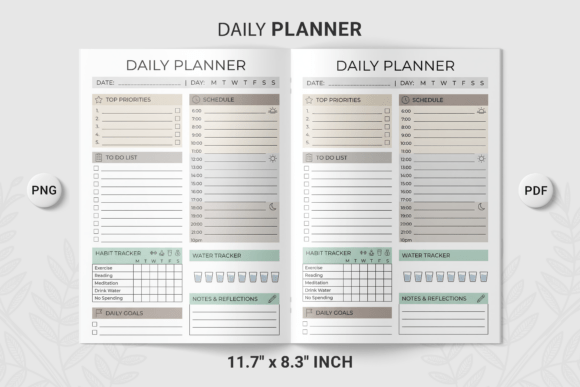
You wear all the hats. Self-care often means “sleeping when I crash.” The Daily Planner combined with the Self Care Intention page gives you permission to schedule fifteen minutes of restorative time as a business strategy, not a luxury. The Fear Setting page is particularly useful for making high-stakes decisions about your business without being paralyzed by anxiety.
What to Consider Before You Start
Before diving into the full interior, take a breath. This planner is a tool, not a test. Here is how to set yourself up for success instead of overwhelm.
- Customize First: In Canva, spend twenty minutes setting up your colors, fonts, and removing pages that feel like pressure. Need more Self-Care Tracker pages? Duplicate them. Do not vibe with Fear Setting? Delete that section. The ability to add or remove anything is the most important feature for ADHD brains.
- Start with Three Pages: Pouring your entire life into a planner on day one is a recipe for burnout. Pick three: one daily (like the Daily Planner), one emotional (like the Mood Tracker), and one aspirational (like My Dreams or My Bucket List).
- Format for Your Life: If you are buying this to upload to Amazon KDP, you have a high-quality, tested product ready to go. If you are using it for yourself, download the Canva version. Print it on high-quality paper, or use it digitally in a note-taking app that supports PDF annotation.
- Avoid the All-or-Nothing Trap: You will miss days. The Self Care Intention of this planner is to be forgiving. A missed week does not mean failure. The Monthly Reflection page exists exactly for this reason—to allow you to reset without judgment.
Real Outcomes from Specific Features
Let’s get granular. The Self Love Journey is not just a pretty heading. It is a multi-step process mapped out across several pages—Self Love List, Self Love Questions, Self Esteem Journal—that builds upon itself. One week you identify things you like about yourself. The next week you ask why it is hard to accept a compliment. This turns a passive journal into an active therapy tool.
The Daily Record combined with the Mindfulness Worksheet creates a powerful feedback loop. You record what happened. You sit with how it made you feel. You then apply a lesson using the Growth vs Fixed Mindset prompt. This transforms a simple diary into a cognitive behavioral exercise.
For the entrepreneurial crowd, the combination of Positive Thinking and Accountability is surprisingly strategic. The Manifesting pages are not just woo-woo; they are goal visualization backed by neuroscience. The Fear Setting exercise, popularized by Tim Ferriss, is a high-level decision-making tool. Having it inside a self-care planner acknowledges that your work life and mental health are deeply intertwined.
The Self-Care Checklist and Self Care Ideas pages solve the problem of “I have time, but I don’t know what I need.” Instead of scrolling through social media for ideas, you have a pre-vetted list ready to go. This reduces the cognitive load of decision-making, which is a major source of ADHD fatigue.
The Final Word on Digital Self-Care Tools
The Adhd Self Care Planner works because it meets you where you are. It assumes you have a messy, beautiful, non-linear brain that needs flexibility, not rigidity. It understands that self-care for an ADHDer looks different. It needs to be visual, changeable, and kind. It needs to track habits without creating shame, and promote accountability without demanding perfection.
Whether you are preparing it as a Ready to Upload Amazon KDP product with a professional Belongs to Page and high-quality print finishes, or you are editing the Canva Interior for your own chaotic Tuesday afternoon, the value is the same. It provides a container for the chaos. It gives you a place to put your racing thoughts, your big feelings, and your daily wins. It is a practical, forgiving framework that you can put down and pick up again, over and over, without judgment. That is what real self-care looks like.